Suddenly Famous: What Really Happens When the Algorithm Finds Your Favorite Underground Community
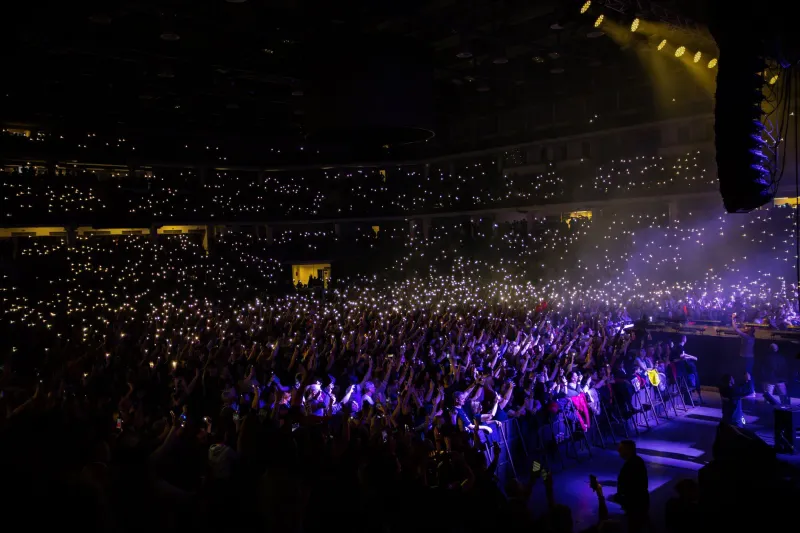
There's a specific kind of grief that doesn't have a clean name yet. It hits when you open your favorite forum, Discord server, or subreddit one morning and realize — almost immediately — that something has shifted. The vibe is off. The inside jokes land differently. The comment section is full of people who clearly just got here. Your niche, the one you spent years nurturing and finding your people in, just got discovered.
And honestly? It's a lot.
This isn't a new phenomenon, but the speed at which it happens now is something else entirely. TikTok's For You Page has a particular gift for yanking obscure subcultures into the blinding fluorescence of mainstream attention. Reddit's algorithm surfaces threads to millions of people who never went looking. Even a single YouTube video from a mid-sized creator can send a wave of newcomers crashing into a community that was perfectly happy being small.
So what actually happens next? And is there anything you can do about it — without becoming the person who hangs a velvet rope outside a hobby?
The Discovery Paradox
Here's the uncomfortable truth: most niche communities exist in a constant tension between wanting to grow and wanting to stay exactly as they are. You want new people to find the thing you love. You want it validated. You want the community to survive. But you also want it to feel like it did when it was yours in a more specific way.
When outside attention arrives, it usually comes in one of two flavors. The first is gradual — a slow trickle of newcomers who found the community through organic search, word of mouth, or a recommendation from someone already inside. These folks tend to acclimate. They lurk before they post. They read the room.
The second flavor is the flood. And the flood is what breaks things.
The r/wallstreetbets explosion during the GameStop saga in early 2021 is probably the most dramatic recent example. What had been a chaotic but self-aware community of retail investors — with its own language, its own in-jokes, its own weird culture — became a global news story almost overnight. The subreddit went from around 1.8 million members to over 9 million in a matter of days. Long-time members described it as watching their neighborhood get gentrified in real time. The culture didn't just dilute — it transformed into something barely recognizable.
Contrast that with the slow-burn discovery of the r/VinylCollectors community, which has managed consistent growth without the same cultural implosion. Mods there have been deliberate about onboarding — pinned guides, a strict but fair ruleset, and a culture of redirecting newbies to existing resources before they start posting. It's not perfect, but the community still feels like the community.
Why 'Just Let It Grow' Usually Doesn't Work
Well-meaning people often suggest that communities should simply embrace new members and trust that culture will self-replicate. And in theory, that's lovely. In practice, culture is surprisingly fragile, especially online.
Niche communities develop their identity through shared experience over time. There's an implicit understanding of what belongs here and what doesn't — not in an exclusionary way, but in the way that a jazz club and a sports bar are both perfectly good places that serve different needs. When the composition of a community shifts dramatically and quickly, the shared understanding breaks down. Longtime members get exhausted explaining context. Conflicts spike. Moderation becomes a full-time job. And often, the original core quietly drifts away to find somewhere quieter.
That last part is the real loss. When the OGs leave, they take the institutional knowledge with them. The community becomes a shell that looks like the original thing but doesn't function like it.
What Thoughtful Communities Actually Do
The good news is that some communities have navigated sudden attention without losing their soul, and there are real, repeatable strategies behind their success.
Slow the door without locking it. Some Discord servers and forums have experimented with application-style onboarding — not to be elitist, but to create a moment of friction that filters out people who aren't genuinely interested. Even something as simple as requiring new members to introduce themselves or answer a basic question about the hobby can dramatically improve the quality of who sticks around.
Document your culture explicitly. Don't assume newcomers will absorb your community's norms by osmosis. Write them down. Pin them. Make them accessible and human. The knitting community on Ravelry, for example, has extensive community guidelines that feel less like legal documents and more like a letter from a friend explaining how things work around here.
Let existing members lead onboarding. Some of the healthiest communities designate unofficial 'welcome crew' roles — experienced members who genuinely enjoy helping newcomers get oriented. This takes pressure off mods and creates a warmer experience for people who are new but well-intentioned.
Be honest about what you are. If your community has always been a place for serious hobbyists and not casual fans, it's okay to say that clearly. Not aggressively, not snobbishly — just honestly. 'This space is for people who are really into X, not just curious about it' is a legitimate and useful signal.
The Gatekeeping Question
Let's address the elephant in the room, because it always comes up: where's the line between protecting a community's culture and being a gatekeeper?
It's a fair question, and the answer is messier than either side usually admits. Pure gatekeeping — keeping people out because they're new, different, or insufficiently hardcore — is corrosive and often rooted in the kind of exclusivity that does real harm. But the word 'gatekeeping' also gets weaponized to shut down any attempt at maintaining community standards, which isn't fair either.
The distinction worth holding onto: gatekeeping is about who you are, while community standards are about how you behave here. Welcoming anyone who's genuinely interested while being clear about norms and expectations isn't gatekeeping. It's stewardship.
You Can't Stop the Wave — But You Can Surf It
Here's the hardest truth in all of this: if your community is doing something genuinely interesting, people will eventually find it. The algorithm is patient and indiscriminate. Virality is unpredictable. You can't fully opt out of discoverability in 2025 without going fully private, and even then, screenshots travel.
What you can do is build a community that's resilient enough to absorb attention without losing what made it worth finding in the first place. That means investing in infrastructure before the flood — not after. It means writing down your culture, training your mods, and thinking carefully about what you actually want your community to be.
Because the communities that survive discovery aren't the ones that kept everyone out. They're the ones that knew exactly who they were when the strangers showed up.