The Velvet Rope Problem: When Niche Communities Start Deciding Who's "Niche Enough"
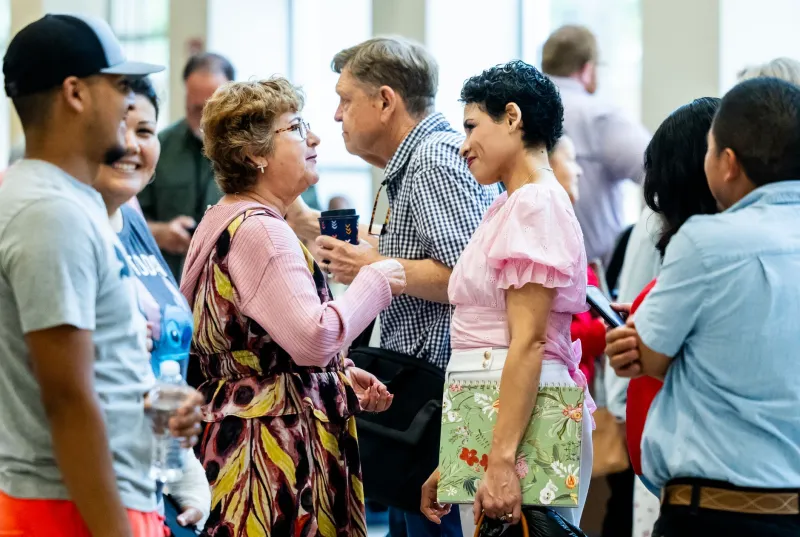
There's a moment in the life of almost every successful niche community where the vibe shifts. The early days were scrappy and open — anyone who stumbled in was welcomed like a long-lost cousin. Then the community grew, developed its own culture, inside jokes, unwritten rules. And somewhere along the way, the welcome mat got a little harder to find.
Gatekeeping in niche spaces is one of those topics that makes people defensive fast. Nobody wants to admit they're doing it. But it's happening everywhere — from vintage sneaker forums to tabletop RPG Discord servers to regional foraging groups — and the effects on community health are more significant than most moderators want to acknowledge.
What Gatekeeping Actually Looks Like (Hint: It's Usually Subtle)
Forget the obvious stuff — explicit entry requirements or moderators telling newcomers to "do their research." The most common forms of gatekeeping in niche communities are far more passive, and often completely unintentional.
It shows up in the language. Every tight community develops its own shorthand, and that's genuinely part of the appeal. But when insiders respond to basic questions with acronyms and references that require years of context to decode, the message to newcomers is clear: you don't belong here yet.
It shows up in the culture of expertise performance. In some communities, asking a "dumb question" invites a pile-on of corrections and condescension that would make any reasonable person think twice before posting again. The most knowledgeable members get the most status, and anyone who disrupts that hierarchy by being visibly new becomes a social inconvenience.
And it shows up in what gets celebrated versus what gets quietly ignored. When a community consistently amplifies content from established members and scrolls past contributions from newer voices, that pattern communicates something — even if no one ever says it out loud.
Why Communities Gatekeep in the First Place
Before we get into why it's a problem, it's worth understanding why it happens — because the motivations are often legitimate.
Niche communities form around shared depth of interest. The whole point is that this is a space where you don't have to explain why you care so much. When the community grows quickly and fills with people who are casually interested rather than deeply invested, that core feeling can erode. Long-time members start to feel like strangers in a space they built.
"We had this period where the subreddit blew up after a mainstream article mentioned us," recalls Theo, a moderator for a community dedicated to hand-engraved watchmaking. "Suddenly we had thousands of new members, and most of the posts were really surface-level. The people who'd been there for years just... stopped posting. It felt like the thing that made it special had been diluted."
That instinct to protect community culture isn't wrong. The problem is when protection tips into exclusion, and when the barriers to entry become invisible walls rather than genuine standards.
The Cost Nobody Talks About
Gatekeeping has a compounding cost that communities often don't feel until it's too late. When new members consistently have bad first experiences — feeling talked down to, confused by insider language, or simply ignored — they leave. And the people most likely to leave are often exactly who the community needs most: enthusiastic newcomers who bring fresh perspectives, different backgrounds, and the kind of beginner's energy that reminds long-timers why they fell in love with the niche in the first place.
Over time, a gatekept community doesn't just stop growing — it starts aging in place. The founding members get older, move on, or burn out. Without a pipeline of engaged newer members who've been genuinely welcomed and developed into contributors, the community loses its vitality.
There's also a diversity cost. Gatekeeping disproportionately affects people who don't already share the cultural background of the community's founders. Insider language, assumed knowledge, and informal social codes all tend to reflect whoever was there first — which in many American niche communities means a fairly narrow demographic slice. Communities that never interrogate their gatekeeping often end up wondering, years later, why they're so homogeneous.
When Exclusivity Actually Works
Here's the nuance that gets lost in these conversations: not all exclusivity is gatekeeping, and not all gatekeeping is harmful.
Some communities genuinely require a baseline of knowledge or commitment to function. A forum for licensed amateur radio operators, a group for professional ceramic artists, a space specifically for survivors of a particular experience — these communities have real reasons to limit membership, and doing so protects the experience for everyone.
The difference between healthy exclusivity and corrosive gatekeeping often comes down to how the standard is communicated and enforced. Is the barrier clearly explained and consistently applied? Does the community actively help interested newcomers meet the standard? Or is the bar vague, enforced selectively, and weaponized to dismiss people who simply haven't been around long enough?
Communities that navigate this well tend to have explicit onboarding — pinned posts that explain the culture and vocabulary, dedicated spaces for introductory questions, veteran members who've voluntarily taken on a welcoming role. They make the unwritten rules written.
A Practical Guide to Keeping Culture Without Closing the Door
If you're a community builder or moderator wrestling with this tension, here are some approaches that have worked for real communities:
Create tiered spaces. Have a dedicated channel or subforum specifically for newcomers. This lets beginners ask foundational questions without disrupting more advanced discussions — and it signals that beginners are expected and welcome.
Build a living glossary. Document your community's insider language somewhere accessible. Not just definitions, but context for why certain terms or references matter. This turns insider knowledge into an invitation rather than a barrier.
Reward welcoming behavior explicitly. If your community's status system only recognizes expertise, you're incentivizing gatekeeping. Publicly appreciate members who take time to bring new people up to speed.
Do a periodic "first impression" audit. Have someone who isn't deeply embedded in the community look at your space with fresh eyes. What's confusing? What feels unwelcoming? What would make a curious newcomer bounce immediately?
Talk about values openly. Communities that articulate what they stand for — not just what they're about, but how they want to treat each other — tend to self-regulate better. When the culture is explicit, members can hold each other to it.
The communities that endure aren't the ones that kept themselves perfectly pure. They're the ones that figured out how to protect what mattered while still leaving the door open for the next person who really, genuinely belongs — they just don't know it yet.